Utah's High-Volume HoLEP Surgeon

HoLEP Surgery in Utah — The Definitive Treatment for an Enlarged Prostate

Holmium Laser Enucleation of the Prostate, performed by one of Utah's most experienced HoLEP surgeons. The gold standard for BPH of any prostate size — with the most durable long-term results of any prostate surgery available today.

~1,000
HoLEP cases performed since 2022
4.9★
550+ patient reviews on Google
Any Size
From 40g to 200g+ prostates treated
Quick Answer HoLEP at a glance
What it is
A laser surgery that permanently removes the blocking part of an enlarged prostate — no incisions.
Who it's for
Men with BPH symptoms, especially prostates over 40 grams and those on blood thinners.
Recovery
Same-day discharge in most cases. Back to normal activity in 2–3 weeks.
Ready to talk?
Call (801) 432-3022 — new patients seen promptly.

The Procedure

What Is HoLEP?

HoLEP — Holmium Laser Enucleation of the Prostate — is a minimally invasive endoscopic procedure that uses a high-powered holmium laser to remove the entire obstructing portion of an enlarged prostate through the urethra. There are no external incisions. The result is a dramatic, immediate, and durable improvement in urinary flow.

For men with benign prostatic hyperplasia (BPH) — the enlarged prostate condition that affects more than half of men over 60 — HoLEP is widely considered the most effective surgical solution available. Unlike older procedures such as TURP, or newer options like Rezūm or UroLift, HoLEP works regardless of prostate size, removes a larger volume of tissue, and has been shown in long-term studies to provide the most durable results of any BPH surgery.

The procedure is performed under anesthesia as an outpatient or overnight-stay surgery. A thin cystoscope is passed through the urethra. The holmium laser separates the obstructing adenoma from the prostate capsule — much like shelling the core from a piece of fruit — and the tissue is then morcellated and removed through the scope. The preserved outer capsule remains intact and continues to function normally.

Why "enucleation" matters
Traditional prostate surgeries like TURP scrape or vaporize tissue from the inside of the prostate. HoLEP enucleates — meaning it removes the entire adenoma cleanly along its natural surgical plane. This is the same principle as open prostate surgery, but performed with a laser through a scope instead of through an abdominal incision. The thoroughness of tissue removal is why HoLEP results hold up decade after decade.
Visual Walk-Through

Prefer to see how the procedure actually works? Step through our six-stage visual guide →

How HoLEP Compares

The Gold Standard for BPH Surgery

Most men with an enlarged prostate are offered medication first, then told about a menu of procedures if medications stop working. What most men are not told is that these procedures are not equivalent. HoLEP consistently outperforms other BPH treatments on every metric that matters for a long-term result.

ProcedureAny Size Prostate10+ Year DurabilitySame-Day PossibleSexual Function
HoLEPYesBest in classUsuallyErections preserved · retrograde common
TURPUp to ~80gGoodOvernight typicalErections preserved · retrograde common
RezūmSmall-mediumSome retreatmentYesGenerally preserved
UroLiftSmall, specific anatomyHighest retreatment rateYesGenerally preserved
AquablationYesNewer — less dataOvernight typicalRetrograde reduced
Optilume BPHSmall-mediumNewer — emerging dataYesGenerally preserved

Dr. Childs performs HoLEP, TURP, and Optilume BPH, and coordinates access to all current BPH treatments. The goal is always matching the right procedure to the right patient — not pushing a single approach. For men who want one durable procedure they are unlikely to ever need repeated, HoLEP is almost always the answer.

For a more detailed side-by-side of each treatment, see our BPH Treatment Comparison page.

Who HoLEP Is For

Am I a Candidate for HoLEP?

HoLEP is appropriate for the vast majority of men with urinary symptoms from an enlarged prostate — and uniquely capable for men whose prostates have grown too large for TURP or other minimally invasive procedures.

You are likely a good HoLEP candidate if:

  • Your prostate is larger than 40 grams — especially if larger than 80 grams, where HoLEP becomes the clear best option
  • You have bothersome urinary symptoms: weak stream, frequent urination, nighttime urination, urgency, or incomplete emptying
  • Medications like Flomax, Rapaflo, or Proscar have stopped working or are causing side effects
  • You've been told you have bladder outlet obstruction on urodynamics or UroCuff testing
  • You've had urinary retention or needed a catheter
  • You want a durable solution you're unlikely to need repeated in your lifetime
  • You have a very large prostate (>100g or >150g) and have been told TURP isn't a good option
  • You are on blood thinners — HoLEP has substantially lower bleeding risk than alternatives

Alternative options may be worth discussing if:

  • Your prostate is very small and you want the least-invasive possible option — Rezūm, UroLift, or Optilume may be reasonable first steps
  • Preserving antegrade ejaculation (for fertility or personal preference) is your single most important priority
  • You have severe bladder dysfunction that wouldn't be fully solved by relieving outlet obstruction alone

These are starting points, not final answers. The right procedure depends on your prostate size, symptom severity, bladder function, overall health, and personal priorities. Dr. Childs performs HoLEP alongside TURP, Optilume, and coordinates access to all current BPH procedures — so the goal of the consultation is always the right fit for you, not the most procedure.

For Catheter-Dependent Patients

Currently catheter-dependent from BPH? There's a high-probability path back to normal urination.

Roughly 85–95% of men on indwelling catheters because of an enlarged prostate are catheter-free after HoLEP — even those with long-standing obstruction and seemingly "weak" bladders. If you've been told you'll always need a catheter, it's worth a second opinion before accepting that answer.

Read the 4-part catheter-dependent BPH guide →

Experience Matters

Why Surgeon Volume Is the Most Important Factor

HoLEP has a well-documented learning curve. Multiple studies have shown that surgeon experience — specifically the total number of HoLEP cases performed — is the single strongest predictor of outcomes, operating time, complication rates, and long-term symptom improvement.

A surgeon who performs 10 HoLEPs a year is not performing the same procedure as a surgeon who performs 200 a year. The technique demands efficient tissue-plane identification, careful hemostasis, and skilled morcellation — all of which only come from consistent repetition. This is why academic centers historically dominated HoLEP; it took volume to build competence, and most private-practice urologists did not perform the procedure at all.

~1,000
HoLEP Cases
Performed since September 2022
Any Size
Prostate Volume
Routine cases up to 200g+
Utah
Top Volume Statewide
Among the highest HoLEP volumes in the state

Dr. Brandon Childs is a board-certified urologist who trained at Lahey Hospital and Medical Center in Boston, with additional training at Beth Israel Deaconess Medical Center — a Harvard Medical School affiliate. He has been in practice since September 2022 and has built one of the highest HoLEP volumes in Utah, routinely performing cases on prostates that other urologists refer out or treat with less effective procedures.

Read more about why specialist volume matters — or go directly to the comprehensive prostate evaluation to begin a proper workup.

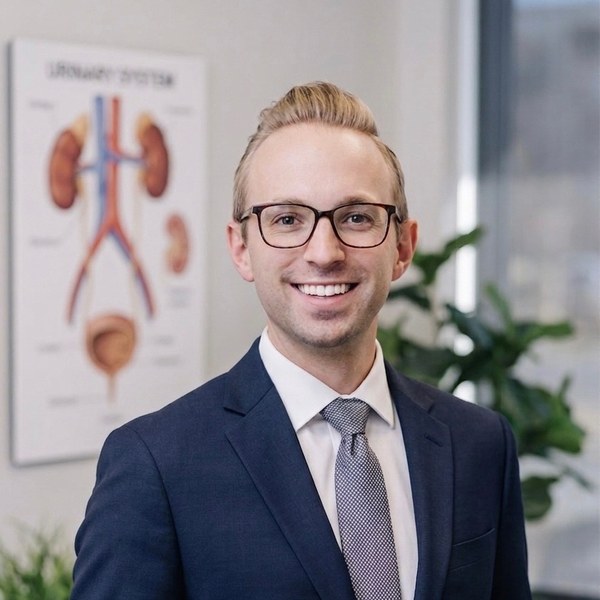
Dr. Brandon Childs, MD — Board-Certified Urologist
Brandon Childs, MD
Board-Certified Urologist · HoLEP Specialist
Salt Lake Valley native. Trained in Boston at Lahey and Harvard-affiliated Beth Israel Deaconess. Returned home to build a private-practice HoLEP program that now serves patients from across Utah and neighboring states. When not in the OR, you'll find him running ultramarathons in the Wasatch.

The Patient Journey

What to Expect — Before, During, and After HoLEP

A well-informed patient is a more relaxed patient. Here is the realistic picture of HoLEP surgery — from the first consultation through full recovery.

Step 1 · Before Surgery
Consultation & Workup
The first step is a proper evaluation to confirm HoLEP is the right procedure for you. This typically includes a detailed history, prostate size measurement (ultrasound or MRI), urinary flow testing, cystoscopy if indicated, and a conversation about your symptom priorities. Not every man with BPH needs surgery — and not every man who needs surgery needs HoLEP. The goal is the right procedure, not the most procedure.
Medical clearance is arranged if needed. Blood thinners are adjusted per protocol. Prior authorization is handled by our office.
Step 2 · Surgery Day
The Procedure
Arrive at the surgical facility — typically Riverton Hospital, Holy Cross–Jordan Valley, or Intermountain Medical Center depending on scheduling. You'll be under general or spinal anesthesia. The procedure itself typically takes 60 to 180 minutes depending on prostate size.
There are no external incisions. A flexible drainage catheter is placed before you wake up. Most men are discharged the same day or stay one night. Pain is typically mild and managed with non-narcotic medications in the majority of cases.
Step 3 · First 24 Hours
Catheter & Discharge
You'll have a catheter in place overnight. In most cases, the catheter is removed the following morning before you go home — unlike TURP, where catheters are often left in for 2–4 days. You'll urinate on your own before discharge. Some mild burning or urgency is normal as the raw surgical surface heals.
Step 4 · Week 1
Rest and Gradual Return
Light walking and normal daily activities are encouraged from day one. No heavy lifting (over 10 lbs), strenuous exercise, or sexual activity for approximately 2–3 weeks. Expect some blood in the urine — this is completely normal as the prostate surface heals and can come and go for several weeks. Hydration is critical.
Step 5 · Weeks 2–6
Urinary Recovery Curve
Most men notice dramatically improved urinary flow within days. Mild urgency, occasional leakage, or frequency is normal during this healing window as the bladder adjusts to the new outflow. These symptoms resolve steadily. Blood in the urine tapers off. Most men return to work within 1–2 weeks.
Step 6 · Three Months & Beyond
Full Result
By three months, healing is essentially complete and the full benefit of the surgery is realized: dramatically improved flow, substantially reduced nighttime urination, and — most importantly — a durable result. Most HoLEP patients never need another BPH procedure in their lifetime.
What most patients say
Most HoLEP patients are urinating with better force in their first week after surgery than they have in years. By three months, nighttime bathroom trips typically drop from 4–5 to once or none. The answer to "will I pee normally again?" is yes — usually better than normal. This is the reason most patients tell us they wish they'd had the surgery sooner.
For detailed day-by-day post-operative instructions, see our post-operative instructions page.

"The consultation is the most important step. Most men wait far too long to address BPH."

Call the office and we'll walk you through what's involved — from insurance verification to scheduling a proper prostate evaluation. New patients are seen promptly.

Out-of-State Patients

Traveling to Utah for HoLEP

A meaningful percentage of Dr. Childs's HoLEP patients travel to Utah from out of state — often from regions where high-volume HoLEP surgeons are scarce. The process is streamlined: remote pre-operative review, a coordinated 3–4 day trip, same-day catheter removal in most cases, and post-operative follow-up that can be handled by telehealth with your local urologist involved.

If you're considering traveling for HoLEP, we've built a full guide to the travel pathway, logistics, and FAQs specifically for out-of-state patients. Read the travel patient guide →

Or call the office directly at (801) 432-3022 — your first conversation with Dr. Childs can be by phone or telehealth before you book any travel.

What Patients Say

Real Outcomes From Real Men

Dr. Childs's practice has earned 550+ reviews averaging 4.9 stars on Google. Below are a few representative themes from HoLEP patients specifically. These are sample quotes illustrating common patient experiences — many more full reviews are available on Google.

★★★★★
"First good night's sleep in years."
After years of getting up four or five times a night, I was back to sleeping through the night within two weeks of surgery. I wish I had done this ten years ago. Dr. Childs and his team made the whole process easier than I expected.
HoLEP patient — 72
Verified Google review theme
★★★★★
"Home the same day. Catheter out the next morning."
I was told elsewhere I'd need a catheter for three or four days. Dr. Childs removed mine the morning after surgery and I was home before lunch. His experience really shows — everything was smoother than any surgery I've had.
HoLEP patient — 68
Verified Google review theme
★★★★★
"He explained every option honestly."
I came in expecting to be pushed into one procedure. Instead Dr. Childs walked through every option, what the trade-offs were, and which one he thought was best for my situation. That's why I trusted him with the surgery.
HoLEP patient — 64
Verified Google review theme

Questions

HoLEP Frequently Asked Questions

How much does HoLEP cost?

HoLEP is covered by Medicare, Medicaid, and all major commercial insurance plans when medically indicated. Your out-of-pocket cost depends on your specific plan's deductible, copay, and surgical facility. The office verifies your coverage and handles prior authorization before scheduling surgery so you know what to expect financially upfront.

Will HoLEP affect my sexual function?

Erectile function is preserved in the large majority of HoLEP patients. The most common sexual side effect is retrograde ejaculation — where semen travels backward into the bladder during orgasm rather than outward. This is not harmful and does not affect orgasm sensation itself, but it does affect fertility and is something every HoLEP patient should understand before surgery. Retrograde ejaculation occurs in roughly 70–80% of HoLEP patients.

If antegrade ejaculation preservation is your top priority, Rezūm, UroLift, or Optilume BPH may be more appropriate — this is discussed in detail during consultation.

How is HoLEP different from TURP?

Both procedures treat enlarged prostate through the urethra with no external incisions. The difference is in technique and completeness. TURP uses an electrical loop to shave tissue from the inside of the prostate. HoLEP uses a holmium laser to enucleate — cleanly remove — the entire obstructing adenoma along its natural surgical plane.

HoLEP offers less bleeding, shorter catheter time (typically less than 24 hours vs. 2–4 days), and more durable long-term results. HoLEP can also treat very large prostates (100g, 150g, 200g+) that are too large for safe TURP.

Can HoLEP be done if I'm on blood thinners?

Yes — and this is actually one of HoLEP's major advantages. Because the laser seals blood vessels as it cuts, HoLEP has a substantially lower bleeding risk than TURP or open prostate surgery. Many patients on aspirin, Plavix, Eliquis, or Xarelto can undergo HoLEP with careful perioperative management. Each situation is reviewed individually with your prescribing physician.

How long will I need a catheter after surgery?

In most cases, the catheter is removed the morning after surgery — less than 24 hours. This is one of the reasons HoLEP is preferred over TURP, which typically requires a catheter for 2–4 days. Occasionally a catheter is kept in longer for very large prostates or specific healing reasons, but this is the exception rather than the rule.

How soon can I go back to work?

Most men with desk jobs return to work within 5–10 days. Men with physically demanding jobs typically need 2–3 weeks off to avoid heavy lifting and straining while the prostate fossa heals. Individual recovery varies — this is discussed at the pre-operative visit based on your specific situation.

Will I still need BPH medications after HoLEP?

No — in most cases, BPH medications like tamsulosin (Flomax), silodosin (Rapaflo), or finasteride (Proscar) are stopped after HoLEP recovery. The obstruction is physically removed, so the medications are no longer needed. This is a major quality-of-life improvement for men who have been on these medications for years and don't like the side effects.

How big does a prostate need to be for HoLEP?

There is no upper size limit for HoLEP — it is performed on prostates from 40g to 300g+. For prostates larger than 80g, HoLEP is clearly the best available option, as TURP and most minimally invasive procedures become less effective or unsafe at that size. For smaller prostates, HoLEP is still excellent but other options may also be reasonable depending on your priorities.

Does HoLEP have risks?

Every surgery carries risk. The main risks of HoLEP include: temporary urinary urgency or leakage during the healing phase, bleeding (usually minor), urinary tract infection, urethral stricture in a small percentage of patients, and rarely, persistent stress incontinence. Most of these risks are lower with HoLEP than with TURP. All risks are discussed thoroughly at the pre-operative visit.

Will HoLEP last forever?

HoLEP has the most durable long-term results of any BPH procedure. Because the entire obstructing adenoma is removed — not just partially shaved or heat-treated — the tissue cannot grow back in the same way. Long-term studies show the vast majority of HoLEP patients never need a second BPH procedure in their lifetime. This is a key reason the procedure is often described as "definitive."

Ready to take the next step?

Most men wait too long to address BPH. A single phone call starts the process — we'll help you figure out the right next step, whether that's a full evaluation or simply some reassurance.